Minorities and transnational fascism

The MoH team co-organised a conference at the Complutense University of Madrid
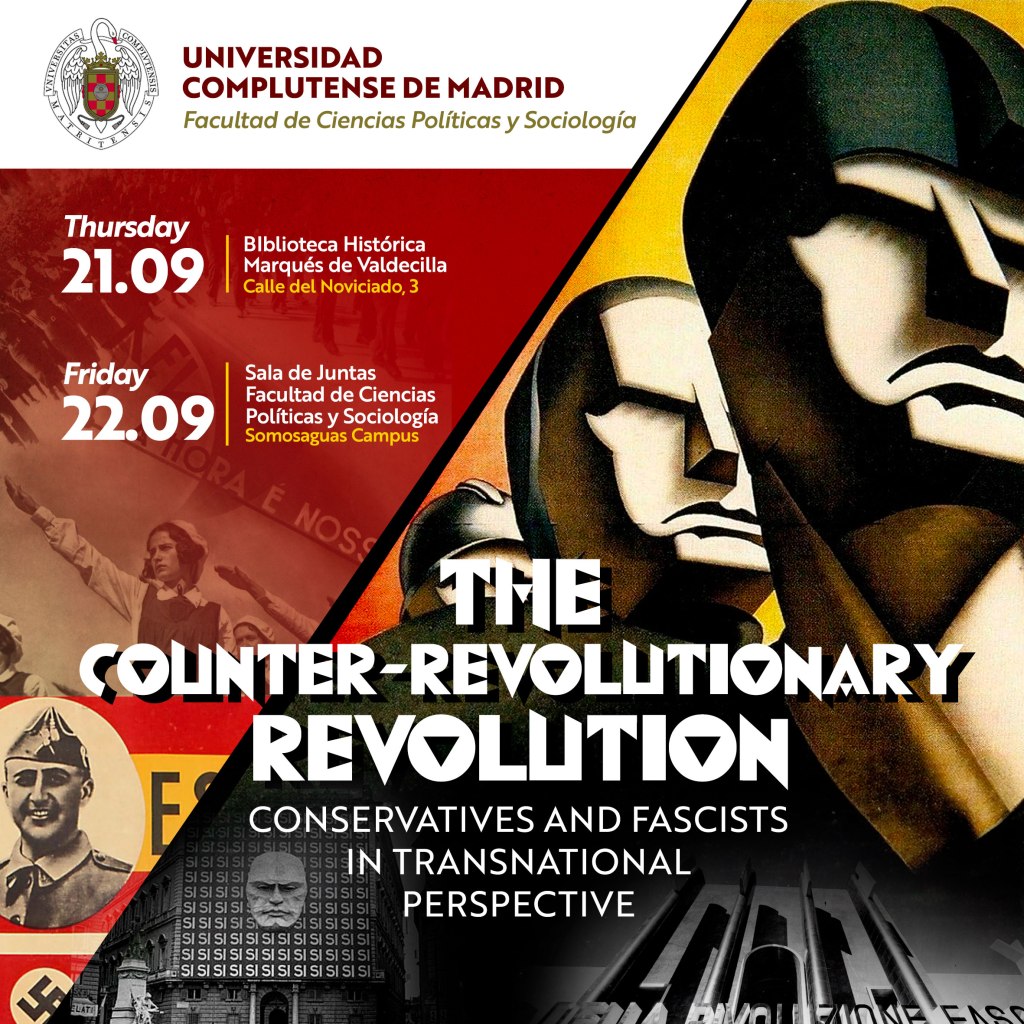
After trade flows, social policy and the environment, the transnational turn has recently impacted the study of conservatism and fascism as well. The MoH team decided to contribute to this trend organising an international conference entitled ‘The Counter-Revolutionary Revolution: Conservatives and Fascists in Transnational Perspective’, which took place on 21-22 September 2023 at the Complutense University of Madrid (co-organised with José Miguel Hernandez Barral, Alejandro Quiroga, Javier Muñoz Soro and Daniele Serapiglia).

In the last few years, the transnational approach has opened up new perspectives for research on the circulation of elements of the ideologies and practices of counter-revolutionary and fascist movements and regimes in inter-war Europe. The transnational approach has also emphasised the initially European and, later, global character of fascism and the counter-revolutionary Right as a response to the crisis of liberalism after the First World War. The conference thus aimed to contribute to the study of fascism and the counter-revolutionary Right as transnational phenomena by focusing on the appeal, external projection and reception of fascist and authoritarian regimes, ideologies and practices in Europe and beyond. Contributions ranged from the March on Rome as a transnational event, the reception of fascism in counter-revolutionary dictatorships in Spain, Portugal and Austria, the adaptation of fascist corporatism in southern European authoritarian regimes and the transnational participation of Italian ‘volunteers’ in the Spanish Civil War.

Emmanuel presented a paper entitled Betting on the wrong horse? Reimond Tollenaere, Staf De Clercq and Nazi transnational support to Flemish radical nationalists, which examined transnational influences, collaborations and dilemmas between radical nationalists in the Flemish-Dutch-German transnational space. There, he argued that the Flemish question during the interwar period embodied the contradictions of an age in which the nationality question that had been ubiquitous in the long 19th century ‘morphed into the minority question’ without disappearing altogether. The quickly nationalising population of Flanders was a demographic majority that, in many ways, behaved as a sociological minority, thus blurring the supposedly tidy lines of division between majorities and minorities, as well as between nationality questions and minority questions.

He also showed that the transnational activities of Flemish extreme-right nationalists and German authorities challenge traditional conception of the relationship between minorities and kin-states. On the one hand, several German actors from the late 19th century onwards identified the Flemings as part of the broader German Volk (as Niederdeutsche). On the other, despite pervasive pan-Netherlandic claims within Flemish nationalist circles, Flemish radicals looked much more towards Berlin than The Hague for support in their struggle for self-determination. Above all, under the Nazi occupation, Flemish extreme-right nationalists who worked to obtain external support, discovered that they were being treated as a German minority that had to be reabsorbed within the larger body of the German Volk. They thus confronted an irresolvable dilemma between their Flemish allegiance and their fascist ideological commitments. Having bet on the wrong horse, they sacrificed their self-determination goals to realpolitik and their allegiance to extreme-right ideals. He concluded that the Flemish story shows the relative and situational nature of the categories of majority, minority and nationality, which are as much self- as hetero-attributed.
Tracking ‘minority’ in Estonia

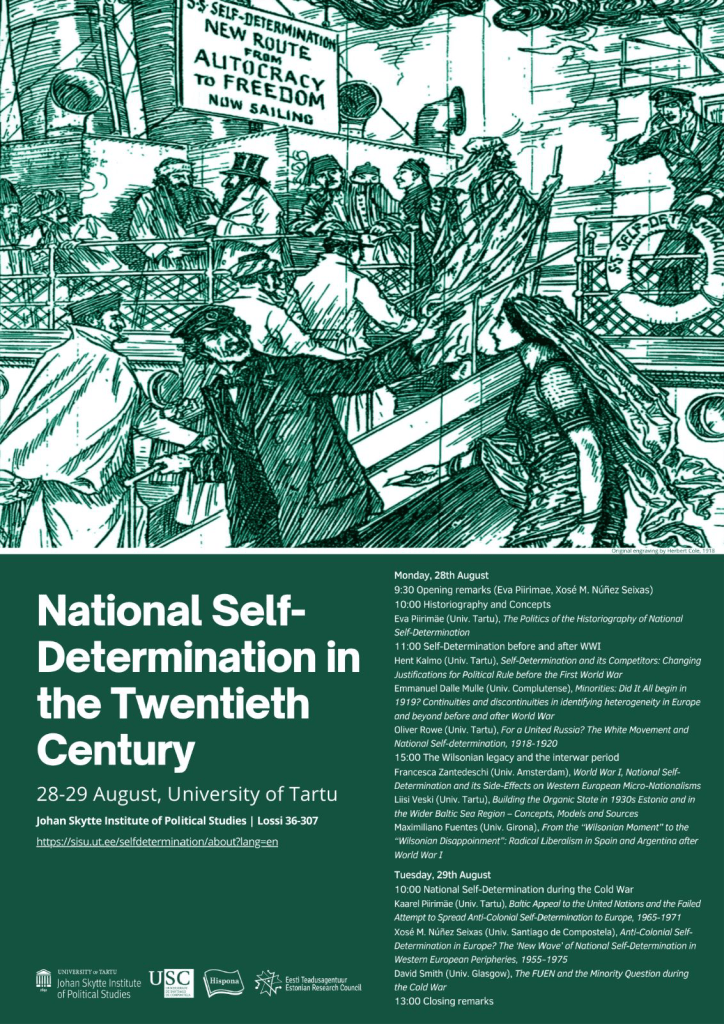
Emmanuel presented on the history of the term ‘minority’ at the workshop National Self-Determination in the 20th Century held at the University of Tartu

In the the 1920s and early 1930s, Estonia was a leader in minority protection in Europe. In 1925, the young republic adopted a law on non-territorial autonomy that, until the 1934 coup d’état, granted minority groups with at least 3,000 members the possibility to create institutions that could manage education and cultural affairs. Given this tradition, it is an ideal place to study issues concerning diversity, recognition, and individual and collective rights.

On August 28-29, researchers from all over Europe gathered at the Johan Skytte Institute of Political Affairs of the University of Tartu to discuss the origins, evolution and complexities of the principle of self-determination. Emmanuel presented a paper entitled “Did it all begin in 1919? A history of the term minority as a category of practice from the 18th century to the interwar period”.

Until recently, Emmanuel argues, the history of minorities and minority rights has followed a fairly standard account. Begun in Europe with the religious wars of the 16th and 17th century, minority protection developed further in the 19th around the Eastern Question and peaked in the immediate aftermath of the First World War, with the minority treaties negotiated at Versailles (there is a second part of the story after 1939, but this does not concern us here). This account has now come under attack. Several authors affirm that until 1919 the term minority, meant as a permanent not a transient minority, was marginal, if not absent, in domestic and international discourses on diversity. Emmanuel shows that revisionist authors have too quickly dismissed the relevance of much of the 19th century for the history of minorities and minority rights. Above all, they have missed an opportunity to explore in depth alternative trajectories to the traditional central and eastern European story. Emmanuel’s paper is a first attempt to draw such an alternative itinerary. Examining a broad range of sources, from parliamentary debates on Ireland and Canada, to demographic and statistical analyses on the populations of the German and Habsburg empires, the paper tracks how philosophers, politicians, geographers and statisticians anticipated a world in which nationality conflicts would play out in the emerging grammar of minorities and majorities. It further suggests that two forces in particular drove the process: political representation, with its imperative of majority rule and the cognate question of minority rights; and census practices, which increased the legibility of the social, constructed difference and fuelled anxiety about numerical superiority and inferiority. The paper received useful feedback that will certainly help improving the final version.

The workshop covered a broad range of topics, from pre-First World War principles of political legitimacy alternative to self-determination to attempts to mobilise anti-colonial self-determination in the soviet space in the 1960s, through the rejection of self-determination by the White Movement during the Russian Civil War and the impact of the Wilsonian Moment in Argentina. In line with the core arguments of the Myth of Homogeneity project, the different contributions confirmed that self-determination, minorities, multi-ethnicity and plurinationalism are realities that extend, and have extended in the past, well beyond central and eastern Europe.

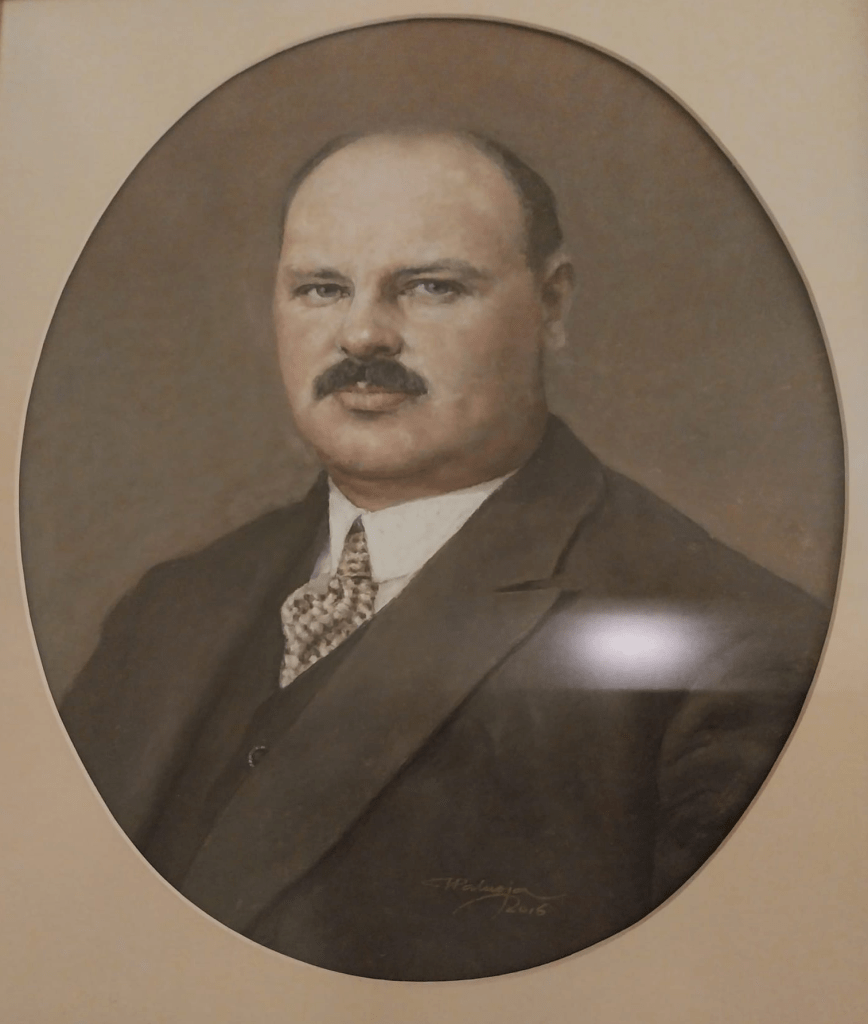
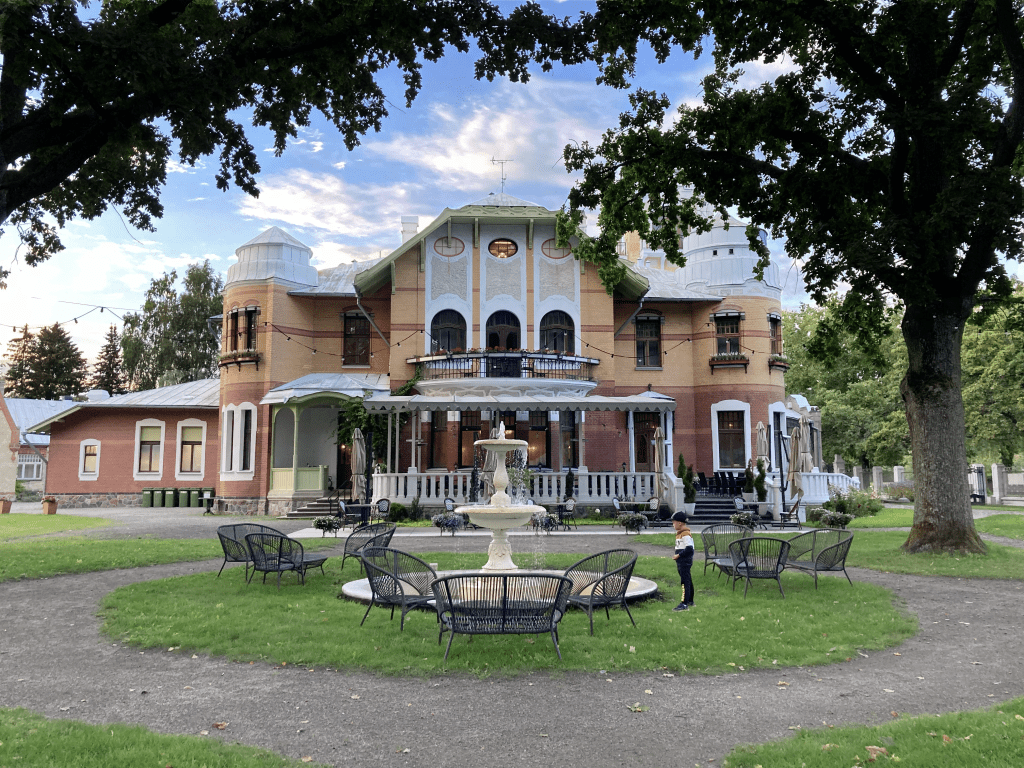
The conference was also the occasion for a visit at the Villa Ammende, in Parnu (pictured above). The house is a fine example of Art Nouveau architecture and, until 1927, the summer residence of the Ammende family. Ewald Ammende, founder of the interwar Congress of European Nationalities, spent many summers there, probably discussing about minority rights in the garden terrace. He still watches discretely the guests visiting the house from a hidden corner in one of the many dining rooms.